Showing posts with label set up. Show all posts

Friday, April 6, 2012

Tank Make Over

During the Wrasse Saga, husband and I came up with several ideas as to why the wrasse was aggressive and how to limit that aggression.  As you can see, so far we've done isolation and re-introduction.  We also redid the tank.

The Sixline Wrasse is a really cool fish.  They are super active and predatory which is probably where a lot of the natural aggression comes from.  Predators are not know for being nice.  Aside from those basic traits, the six line also makes a cocoon when it sleeps at night for protection.  It goes into a coma like state when sleeping and because of that, prefers rocky holes where it can sleep for the night.

Just for fun, here's a brief comparison of the sleeping habits of my tank inhabitants:
Coral- suck up when the lights turn out. The xenia and zoas go to bed first. The GSP usually stays up the longest
Clowns- they sleep whenever in the bottom of the tank, belly touching the sand.  the female likes to sleep "upside down" on her head.  Freaked me out the first time.
Wrasse-  Instantly hides when the lights turn off.  He then makes a cocoon and stays there until morning.

So one hypothesis we came up with was a lack of suitable hidey holes.  We figured our aquascape was not very good for corals and now it may be sub par for fish as well.  We took this as an opportunity to thoroughly clean and rearrange the tank including the refugium.

Goals
Before getting started, we outlined our goals for this three hour project.  Our goals were:

  • Rearrange the rock work for easier coral placement and happier fishies
    • Aim for a minimalist scape without taking out rocks
  • Inspect each rock for Aipstasia
    • Kill Aipstasia if found
  • Clean and rearrange refugium
    • remove old carbon, replace with new carbon
    • put in filter sponge
    • add new refugium light, JBJ NanoGlo
    • get rid of liverock rubble and replace with SeaChem Matrix
  • Not kill any fish or coral
With those things in mind, it began!

Step 1: remove "valuable" lifeforms (fish, coral, one hermit crab. Snails are on their own)
We knew we'd be kicking up a lot of sand a detritus and didn't want to kill anything.  So everything had to come out.
Clownfish in the ReefGently


Coral and hermit in Coral Bucket
Step 2: INSPECT!
We did find Aipstasia on one rock.  We swiftly dealt with it by taking a syringe and needle and injecting it with lemon juice.

The little bubbles is where the exterminated Aipstasia is.

The weapon.
Step 3: Rearrange and wait for sand to settle.

Sandy tank and the tank guardian.

Step 4: After rearranging, clean refugium, do water change

Step 5: After three hours worth of work, re-release the inhabitants. Except for the wrasse so the clowns can set up shop.

Pretty post-pox zoas.

BEFORE:
Holy crap, look how white our rocks were when we first set up!
AFTER:
Much better scape.  Corals are happier too.  I'll post better pics later.
From the pics, the layout looks "less interesting".  however, it's way more fun.  I'll post a video detailing its new levels of funness.  PS  Hopefully I never have to do this again.  

And everyone is getting along much better.

Thursday, January 5, 2012

Tank Shots

Quick post.  Some friends came to visit and one has an amazing cameras.  Enjoy the feeshies! 

the regular clown
PS I found a fantastic Craigs Listing for coral.  If I hear back from the seller, I may have a good stroke of luck.

the little misbar clown
Feather Duster hitch hiker
the hermit

king of the mountain


Saturday, December 10, 2011

Catch Up Post 4: Hitch Hikers! Hooray!


Shortly after getting the crabs, we noticed something odd on the shells.  It was a strange white wormy formation.  We kept it under close observation and finally the worm grew large enough to reveal it was in fact three feather dusters.

Shortly after that we found another one on a rock and yesterday (December 6th) we have found yet another duster.  I am super excited.  They are supposedly good for the tank and filtering and will reproduce quickly.  I think they are really fun to watch.  You might too so you should watch.  He put himself in hard spot to video tape, but you can see him coming in and out of his tube to feed.


We’ve been dosing the tank with Elemental from Brightwell Aquatics to help with the growth of coralline algae.  We have spots all over the rocks, it looks like cotton candy exploded on them.  Elemental is essentially concentrated calcium and feather dusters build their casings out of calcium.  Since we started regularly dosing, one of the feather dusters has doubled in size.  Unfortunately, two riding on the hermit crab I believe have died due to hermit crabby activities.  I am hoping more pop up.   

Thursday, December 8, 2011

Catch Up Post 2: Nitrates, the bane of my fish keeping.


Fear not! All two of my fish are still alive.  Shortly after the shrimp’s death, I noticed a disturbing skyrocket in nitrate levels.  They shot up to 100 ppm.  FYI, that is not good.

The fastest way to reduce nitrate levels are water changes.  The first day I did a 60% water change and brought the levels down to 40 ppm.  The next day I decided to be proactive about my nitrate levels since I had been a little lax.  I did an 80% water change.  Still, the nitrates were and are holding at 40 ppm.  I really, really, really want them below 20.  I want the tanks I see on nano-reef so I need to have this under control.

Once again, I went to Nano-Reef to seek advice on this problem.  The members were helpful in their suggestions and I will list them here in case someone wants a list of things to eliminate in their nitrate problems:

1 Nitrates in the new water.
For me, I know this is not the case.  When I first started my tank, I had no nitrates.  I also checked my new water just in case.

2 Artificial Filter Media.
Artificial filter media, like sponges, can be a magnet for housing debris that in turn creates nitrates.  This can be a possible cause for me.  I am currently using a sponge in my AC70.  Within the next couple weeks, I am hoping to replace my artificial media with Chaeto algae which should drastically reduce nitrates since that is what it intakes to grow.

3  Faulty test kits.
API test kits, like the one I use, do not have the best reviews.  I have been advised to possible use Salifert for more accurate results.  This is another possible cause for me.  However, since I was planning on using Chaeto algae in my filter, I am going to try that first.

Monday, October 24, 2011

Vendors, Products, and Diatoms! Oh my!

So, after sickness, work, school and a wedding this post is a little late in coming. Anyways, this a exciting post with a vendor review, two product reviews and my diatoms from last week!

Last weekend dear husband and I decided to take a lovely jaunt (aka 40+ minute drive) to some local fish stores to get an idea of their prices.  We went to a fish store that claimed to have Mandarin Dragonets on prepared food.  If I get a Mandarin, I really want it on prepared foods since my tank is not large enough to hold a self sustaining supply of copepods.  So, this is important.

Mandarin Dragonet/Goby Image from Pinellas Aquariums
We had been to Top of the Reef before but this time we had specific things we were looking for.  Top of the Reef is an LFS with flair.  The interior is themed in a way that is both interesting and practical.  The entire interior of the store is filled with sand.  Not only does it give you a more "reefy" feel but it also avoids any potential hazards caused by wet floors.  The front half is dedicated to supplies with display tanks showcasing some of their pricier fish and coral.  The back half is where the live stock is kept.

One of the really cool things about Top of the Reef's set up is each tank is individually maintained.  No tank is connected to the same water source.  This greatly reduces the chance of sickness like ich.  If one tank gets contaminated, it is limited to that one tank and does not compromise the rest of the stock.

Another cool thing about Top of the Reef is its liverock.  Most liverock comes from either living reefs or, like the rock in my tank, from ancient fossilized reefs.  The rock from Top of the Reef is completely man made and was created by the store's owner, Tony Saprano (I know, awesome name right?).

Tony is also a real hands on kind of dude.  All three times we have been to the store, he was our guide through his products and livestock.  He is extremely knowledgeable and is the type of hobbyist I love.  He is in it for the animals, education, and ability for man to recreate a semi-natural ecosystem.  A lot of people who own home aquariums are in it mainly because the fish are pretty.  Tony is in it because he loves the ocean like I do.

While at Reef Culture buying our live rock, a store associate recommended we put in some good bacteria to help the tank along and establish a good biological filter.  Unfortunately, they were out of stock at that time.  We traveled to three of the closest LFS to Reef Culture looking for this bacteria only to be told multiple times it was a silly thought and doesn't exist.  From our impressions, Reef Culture seemed to be the most top notch LFS in that area so we were fairly confident it did exist and the store associates were not aware.  Our suspicions were confirmed at Top of the Reef.

PRODUCTS

The almighty MicroBacter7
The product is called Microbacter7.  It is amazing!  Microbacter7 is produced by Brightwell Aquatics.  As the story was told by Tony, the founder of Brightwell Aquatics was a co-founder of the earlier established Kent Marine.  However, the founder disagreed with some of Kent Marine's ideas and thought he could do better.  So he left the company and started his own.

Before MicroBacter7, our nitrites were off the charts.  We added 15 mL the first day to the tank and after 12 hours, the nitrites had dropped to .25 ppm (parts per million) by a full 24 hours, the nitrites had dropped to 0 ppm.  I believe that should be enough said about this product.  Husband and I are thoroughly impressed.  Nitrites have been at zero ever since.

Aqueon Pro 100.  Fits nice and snug next to the AC70's in take tube.
The next product review is the Aqueon Pro 100 heater.  From a previous post, you know our tank temperature suddenly dropped and we had to buy a heater.  This heater is fully submersible and be mounted vertically or horizontally.  We decided to stick it out of the way next to the AC70 intake tube.  I've said before we want to keep the main display as clutter free as possible.

What I like about this heater is it actually tells you what temperature you've set it to.   The Neptune 50 watt we had does not.  It only has a more or less heat knob.  I have the heater set to maintain 77 degrees and so far it's done a fine job of doing so.


DIATOM UPDATE
As of last week, the diatoms are having a party in the tank.  The tank is completely covered in the icky brown stuff and these photos taken last weekend, do not do the tank justice by what it looked like at the beginning of this past weekend.  It was definitely time for a clean up crew.

Diatoms as of October 16th.


As of October 23rd.

Tuesday, October 11, 2011

Help us choose: Shrimp


Which shrimp do you think should go into our tank?

Our tank is almost done cycling.  So here are the fun posts!  Tell us what you think should go into our tank.  Anyone can comment without registering, so have at it!

The CUC (clean up crew) is the first thing to go into a freshly cycled tank.  These are animals that clean poo, algae, and uneaten food.  Examples of these critters are shrimp, snails, and crabs.  We will have all three.  

There are many varieties of shrimp and here are photos and profiles of a few that we think would be interesting to go into our tank.  We can’t have them all, so tell us what your favorites are!

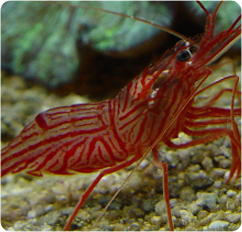
PEPPERMINT SHRIMP
Image from Blue Zoo Aquatics

These little dudes are must.  They are non-negotiable. Not pretty critters, but our tank will have at least one of them.  They eat Aipstasia which is a nasty little pest that’s pretty until it takes over your tank. So, we think one of these little guys would be good to have on hand.

You can view their full profile here at Live Aquaria.

BUMBLE BEE SHRIMP

Image from Scuba Board
 These are some awesome looking shrimp.  That's mainly why we're looking at them.  Most of the fun of a reef tank is having variety of species and a variety of looks.  Some of these shrimp lend themselves very well to that.

These are small shrimp reaching a max length of 1" and we would probably buy them in a pair.

You can view their full profile here at Live Aquaria.

SEXY SHRIMP

Image from Reef Sanctuary
 Why is the Sexy Shrimp sexy?  Because it dances!  It sways it's lower abdomen back and forth when it walks like a sexy women.  These shrimp usually host anemones in the wild or home aquarium but will also host coral and rocks when anemones are not available.  These too are small shrimp at about 1" to 1 1/2".

You can view their full profile here at Live Aquaria and here's a video of the sexy dance!


FIRE SHRIMP
Image from Rate My Fishtank
Now, this is a type of shrimp we want.  The Fire Shrimp is a cleaner shrimp.  What is a cleaner shrimp?  Think of Jacque from Finding Nemo.  The shrimp will perch on a piece of a live rock and fish will come to be cleaned.  Large species of fish will even open their mouths for it.

You can view their full profile here at Live Aquaria and here's a video of a Fire Shrimp in cleaning mode.


BANDED CORAL SHRIMP
Image from Reef Delivered
 The Banded Coral Shrimp is another cleaner.  They are also a bit larger than the Fire Shrimp.

You can view their full profile here at Live Aquaria.

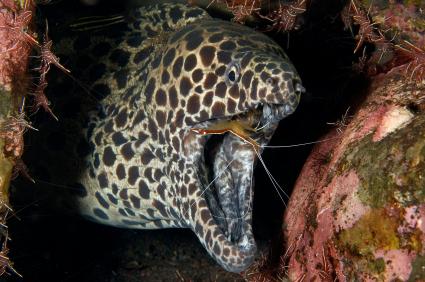
SKUNK CLEANER SHRIMP
I hope to have an eel one day.  Just not as big... Image from About Fish Online
The Skunk Cleaner Shrimp is another cleaner.  They are also usually a bit cheaper than their more flashy cousins.


You can view their full profile here at Live Aquaria.

So tell us what you think! We're in the market for one Peppermint, one cleaner, and one "decorative" shrimp.  Which ones are your favorite?

Saturday, October 8, 2011

Big update! The tank is born!

Sorry for the absence.  School has started and the rocks did not come in when they were suppose to.  But as of last weekend, our tank was born!

The water was still a little cloudy.  but the aqua scape looks good!
We got our order of rocks from Reef Cleaners.  We ordered 15 pounds of  dry Florida reef rock and put in the description the type of tank we had and the aquascape we were looking at doing.  We were thoroughly impressed with the product but not the shipping time.  We paid eight dollars for standard shipping which is fine but they did not offer any expedited shipping which would have been nice.  Regardless, the customer service is fantastic and the product is fantastic so we will definitely order from them again. :)

Rocks from Reef Cleaners


AQUASCAPING

Please enjoy a slide show of our many aquascaping ideas.  We measured out the tank and craftily marked out the borders with a book, a nickle and a pair of scissors.  On my day off from work, I pretended to do homework while I was really playing with rocks and watching Inuyasha.  It is actually a really good show.  The first dry rock runs ended up being the scape we tried to build.


A quick note when aquascaping:
It will be difficult to replicate your structure in the tank... Apparently glass is slippery. 

LIVE ROCK

We bought five pounds of live rock from Reef Culture in Tempe, AZ where we also bought a digital thermometer.  The rocks are very pretty with some variation in magenta and deep purple Coraline algea.  I am very excited for the colors. 


A good view of all three rocks from the "back" or kitchen side of the tank.


CYCLING
We ran the tank for a day while debating on how to kick start the cycle.  When doing all LR, you typically just sit back and wait for it to start.  However, since we only had five pounds of the stuff, we were wondering if it would be enough to effectively start the cycle in what we considered a timely manner.

There are three manners of cycling I found while researching.

One is the fish cycle which I disagree with.  You drop in a hardy fish like a clown or damsel and let that fish's waste be the kick starter.  However, due to the potential high levels of toxin this is very stressful and potentially deadly to the fish.

The other two methods are fishless cycles.  A fishless cycle is exactly what the name describes, a cycle without a fish.  There are two (actually three) common methods I found.

The Dead Shrimp Cycle:  You take a peice of shrimp harvested for human consumption, put it in your tank, and let it decompose.  While this is effective for getting your cycle started, it is also effective for letting deadly bacteria grow in your tank.  This is why the method is debated.  It is great for some people and deadly for others. Deadly for their future fish, not the owners.

The Pure Ammonia Cycle:  This is the method I use.  It requires taking regular, non scented, house hold ammonia (like janitorial strength ammonia from Ace Hardware) and adding it to your tank.  The drawbacks are the large concentrated amounts of ammonia and the effect it will have on your live rock, you may experience some algae die off.  Always research how much will be safe for your tank.  I put a teaspoon of ammonia in for 20 gallons.

The third/non practical cycle:  I added this as a sort of third because it is not practical for first time hobbyists unless you have friends.  This method requires taking filter media from an established tank and putting it into your own tank to kick start cycling.

So How Is Your Tank Doing?
Just great! Thanks for asking :)

We started cycling on October 2nd.  It is now October 8th and we have our first diatom bloom! If you don't know what diatoms are, feel free to reference my Proposed Set Up post and the videos from IPSF on setting up a tank.  In a nutshell though, diatoms are produced when there are high nitrate levels in a tank.  Nitrate is a product of nitrifying bacteria (the production of which is the whole point of cycling) processing the ammonia.

Blurry pic of diatoms.  A better view is in the video.

My tests have followed a good path of high ammonia=low nitrates=no diatoms and the moment my ammonia started decreasing, bam! low ammonia=high nitrates=diatoms.  So I will continue to monitor my levels.

I've been tracking my nitrogen cycle according to this chart:
Image from The Aquarium Wiki
As you can see, my tank is accelerated.  This because using the pure ammonia method put me at day ten on day one.  It took a few days for my nitrates to catch up which is to be expected.  Now I am waiting for the nitrate drop.  I do not have the test kit for Nitrites yet (in the mail from Amazon) so I do not know what my levels are.

When the cycle is done or close to done, I will post a similar chart with my specific data.  I've been recording all of my tests and keeping notes of any changes in a log on Excel.

Final Thoughts:
Here is the break down what the tank specs are:

Tank size: 20 gallon long (30x13x13)
Lighting: one AI Sol Super Blue
Filtration: modified Aqua Clear 70 Power Filter
Waterflow: two 600 Maxi Jet Pro Circulation Pumps
Heater: Well, interesting story.  We live in Arizona and it is, well, hot.  So I did not think I would need a heater for another month. Thanks to Murphey's Law, our tank temperature alarm went off at 5:45 am saying the water was 75.4 degrees.  Before the unexpected cold front, it was sustaining 77.5 all night.  So, I am getting ready to install the heater I got in my free deal.  I don't really like it so we were planning on upgrading next month.  We borrowed from next month's budget and a Aqueon Pro 100 watt heater is on its way. 

And here is the video I promised!

Sunday, September 18, 2011

Vendor Review: Reef Geek

Be a geek! And they definitely made one of me.  The people at Reef Geek were awesome to work with and I'm excited my first review gets to be on their awesome service.

We ordered an AI Sol Super Blue with a hanging kit and controller and two Marineland Maxi-jet Pro circulation pumps on Labor day weekend.  We did not receive our items however until this past Tuesday.  That is not the fault of Reef Geek though.  AI did not ship their new orders of controllers on time and we were told that before hand.

During Labor day weekend we were internet window shopping on different lights and found an awesome deal on the AI Sol at aquacave.  However, after spending an hour or so doing vendor research some of the Aquacave reviews were quite terrifying and made us feel uneasy investing such a large amount of money. 

So, I went on Nano-Reef and did a quick search to find out where other reefers were getting their AIs from.  That's where I came across Reef Geek and many people singing the praises of a man named George.

Hubby and I decided to look into ReefGeek but, unfortunately, the price was too high.  Then we decided that it couldn't hurt to ask for a price match.  After all, the worse they could say was no.

We sent an e-mail to George, who is the sales manager, and he came back with the response of, "We can beat AquaCave's $610 at $600."  And we bought the lights! Then we threw in the two Maxi-jets not only because we were so pleased with their service, but also because they had the cheapest price for the Maxi-Jets.

They also did not charge the card until our items were ready to be shipped and when they arrived, they also included this sweet bumper sticker:

I don't like bumper stickers on my car.  So it's in the window on suction cups instead.
  In summary, I would definitely order from Reef Geek again and I too am singing the praises of George.  They were so easy and lovely to work with.  I look forward to my future purchases with them!

Happy swimming!

Appareantly not only does it take two to make a baby, but also a reef tank.

This weekend hubby and I were productive and busy little bees on the tank.  The lights are hung, cords are managed, and the refugium is glued.  Here are the photos of our progress!

AQUA ILLUMINATION SOL SUPER BLUE LEDS

The hanging brackets.  We found out that a stud is above one of the brackets and so we used a sheet metal screw instead of the toggle bolt that came with the kit.  The other one did not have a stud behind it so we used the original toggle bolt.
There was a ton of excess wire from the hanging kit and we didn't want to cut it because we plan to move in the near future.  Hubby thought of this creative way of weaving the wire through the mounting rails.  We later secured them with zip ties which you can see in the lower photos.
Once we took care of the hanging, the next dilemma was cord management.  This was solved by using white electrical tape to make the cords much less conspicuous and running them down the walls.

The make the turns crisp and clean, we nailed in small wire nails.  You can  barely see the head in the photo.

Another example of the nails.
This is how it looked before the white tape.


After the white tape.

So, there is an extra cord in our set up that looks really ugly because we didn't try to hide it.  The cord is the data cord connecting to the AI controller.  The reason we didn't photograph it or hide it is because we have a wireless adapter coming in three months so we just temporarily made it a little on the ugly side and kept these photos since this is more to the idea of what we'll have with the wireless adapter.


REFUGIUM MOD
I did my refugium mod based off of these directions by El Fab at Nano-Reef.  I skipped the directions for modding the intake tube since my tank is not a pico tank.
The materials I used were:

  • DAP Household Sealant
  • an Xacto knife
  • Scissors
  • Toothpicks
  • AquaClear 50 powerfilter (or higher, I used 70)

DAP Household Sealant bought at Ace Hardware
photo from the top of modded refugium
The divider.  Make sure the tips are facing away from the algae.  It'll make clean up easier.  I ended up cutting those tips off.
Photo of the front and overflow screen.
 So, that is what we did this weekend.  We also put in an order for 15 pounds of Florida base reef rock from ReefCleaners.org and will be getting live rock next weekend from our LFS (local fish store).  In short, we're planning to begin cycling next weekend! So look forward to that and probably a demo of the lights since we'll most likely be taking video.  Oh, and we decided to hold off on the algae until putting in the clean up crew which we will probably also order from ReefCleaners.

 Happy swimming!

Wednesday, September 14, 2011

Quick Post: The Value of Craigslisting.

I made up this spread sheet to show the value of Craigs listing and being aware that people might want to get rid of stuff for free, oh and I forgot to add on the liverock, sand and tank, but I'm sure you get the idea without that stuff:

You will not find if you do not look! :)

Exciting!

The lights of the century have arrived! DH (Dear Husband) will be hanging them this weekend. Then we will be ordering our base rock.

Right now this is the plan:
For the initial set up of a now 20 gallon long tank, we will be spreading the costs over some weeks. Right now this is $40 a week so you can see if you want to take longer setting up your tank it can conceivably be done. We have determined that $40 seems to be the sweet price for all of the equipment.

We also ordered an Aquaclear 70 powerfilter.

That will be converted into a mini sump and refugium.

Image from NanoReef.com
The above image is approximately what my refugium will look like.  In addition to the Chaeto algea (apparently pronounced "kay-toe" but I still call it a "cheeto"), my powerfilter will also house my tank heater and thermometer, a carbon filter, and a Mini Rio Sun led light from my Craigslist purchase .  I want to put my ammonia detector in there as well, but I don't think I would be able to see it clearly.  So that has yet to be determined.  I want to keep out as much equipment as possible in the display tank.

For all of you who are new to the hobby, you may be wondering, "What is a sump, a refugium, and Chaeto algea?"
"Won't it turn it orange?" on the topic of adding Chaeto before or after cycling at NanoReef.com


 What is a sump?
A sump is a secondary source of water for your tank.  Traditionally it sits in, lets say, a 10 gallon or larger tank beneath the main system.  This secondary tank connected via pumps and pipe to your display tank increases the volume of water, filtration, and aeration.  Therefore logic also dictates it can allow you to have a larger bioload.  But please don't overcrowd your fishies.


A sump also allows you to have an out of the way space for your filtration media.  Things like carbon filters, a refugium with Chaeto algea and more liverock, all of that can be put into the sump.  It can also house your heater, thermometer, protein skimmer, calcium reactor, all of the things you don't want in the tank people will see.  So it's pretty beneficial.

My Aquaclear power filter will only provide an extra 2.5 gallons.  I do not want a larger sump because of the extra expense and space.  But it will serve its purpose.

An example of a typical sump beneath the display tank.  From Setupsaltwateraquarium.com


What is a refugium?
Webster describes a refugium as an area where an organism can survive through undesirable conditions.  Like a house when a hurricane is coming through can be deemed a "refugium".
This definition holds true to a reef tank as well.

A refugium is a body of water separated from the display tank.  It is used to house organisms that would not survive in the tank.  For example, I also plan on breeding copepods to one day get a Mandarin Dragonet.  If the copepods were in the main tank, their numbers would be decimate by, not only the Dragonet, but by the other fish and crustaceans as well.  So, I need to have a breeding colony set aside to feed my fish.
A Mandarin Dragonet.  Hard to keep in smaller tanks due to feeding requirements.
A refugium also houses algae that are beneficial in natural filtration.  Chaeto algae is on of those.  Additionally the Chaeto acts a food source for copepods.  So, it's doubly beneficial to the tank.


What is Chaeto algae?
Cheato algea (Chaetomorpha linum) is a free floating fibrous algae that sucks nitrates and phosphates from a tank.  Nitrates and phosphates are killers in a system and need to be kept in check.  The algae is an active growing algae and can be kept on a reverse lighting schedule.  This means when my tank lights are off, my fuge light will be on.  This will stimulate growth in the algae and reduce the nightly pH fluctuations associated with reef tanks.
Chaeto algae
Can Chaeto algae be added while the tank is cycling?
This is a hot topic question.  The only conclusive answer is there is no conclusive answer.  Some people have had the algae live through the cycling and make it milder, others have had it just up and die off.  I will be putting mine in at the start of the cycle.  We'll see what happens.  It's about $5, so not too bad of a price if it dies.  If it does not make it, I'd probably just buy another ball of it.  But we haven't ordered the Chaeto yet, so we may change our minds.


Here are some links regarding sumps, refugiums, and Chaeto algae:
http://saltaquarium.about.com/cs/bcorsettingup/a/aa020298sumps.htm
http://rettalbot.suite101.com/what-is-a-refugium-a40610
http://www.reefchaeto.com/

Look forward to the start of the tank set up!  Plus a vendor review of ReefGeek!

Happy swimming!